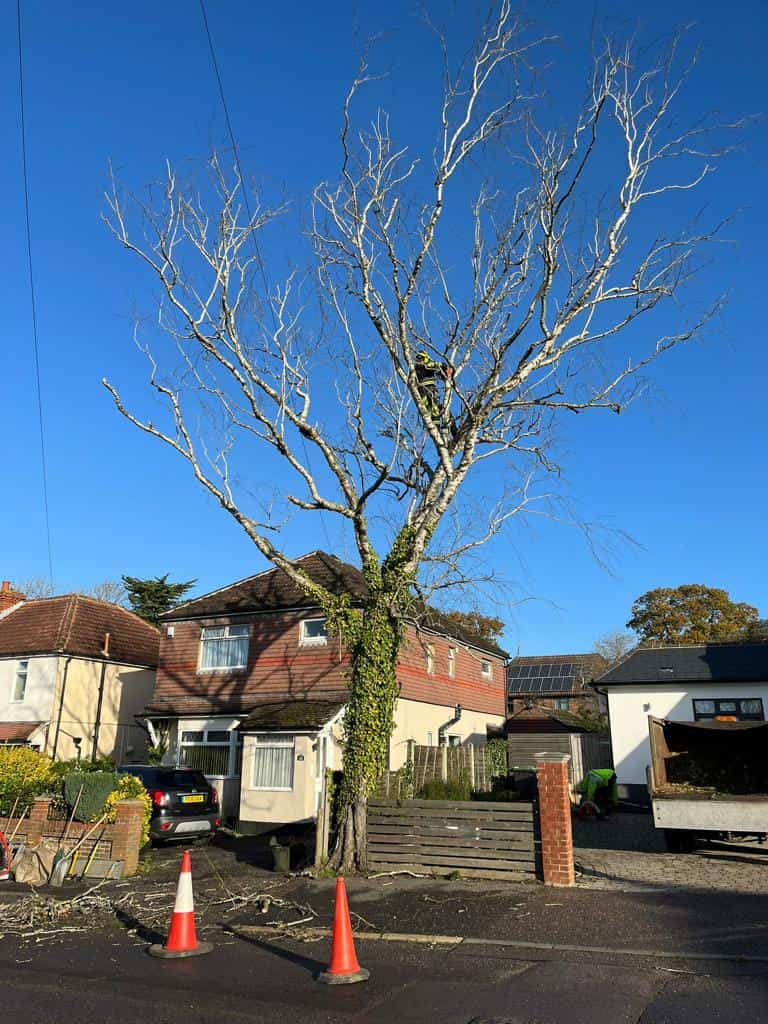
Trees bring structure, shade and natural character to a garden, but they also require appropriate care as they grow and mature. Changes within the crown, trunk or root area can affect a tree’s health, shape and stability, particularly when defects are left untreated.
A professional tree surgeon can assess the whole tree and recommend work suited to its species, condition and surroundings. For property owners in Ascot, Berkshire, knowing when to seek professional assistance can help keep established trees healthy, balanced and manageable.
Signs That Professional Tree Surgery May Be Needed
Tree surgery is not limited to removing trees. It includes pruning, crown management, deadwood removal, reshaping, stump grinding and other specialist services. The correct approach depends on what the tree needs rather than how much growth can be removed.
Professional assessment may be advisable when you notice:
- Dead, cracked or hanging branches
- A tree leaning or changing position
- Excessively dense or uneven growth
- Branches obstructing paths or driveways
- Limbs making contact with nearby structures
- Sparse foliage or dying branch tips
- Cavities, decay or fungal growth
- Damage following strong winds
- Roots lifting nearby surfaces
- A tree becoming too large for its surroundings
Some defects are clearly visible, while others can remain hidden within the canopy.
Dead or Damaged Branches Are Present
Deadwood can remain attached to a tree after it has stopped receiving sufficient nutrients and moisture. As it deteriorates, the branch may become brittle and more likely to break.
Cracked or partially detached limbs can present a similar concern. They may remain supported temporarily by neighbouring branches but move unexpectedly during windy conditions.
A tree surgeon can identify unstable growth and remove it using controlled methods. Correct cuts also reduce unnecessary damage to healthy tissue surrounding the affected branch.
The Tree Has Become Overgrown
An overgrown tree may block light, restrict access or dominate a garden. Branches can extend across paths, driveways, roofs and outdoor seating areas, making the surrounding space harder to use.
Depending on the tree’s form, professional work may include selective pruning, crown lifting or crown reduction. The objective is to improve clearance and manage overall size while retaining a balanced appearance.
Removing too much growth at once can stress the tree and encourage weak, rapid regrowth. Professional pruning considers how the tree is likely to respond after work is completed.
The Crown Looks Uneven or Unbalanced
A crown can become unbalanced following storm damage, competition for light or unsuitable previous pruning. Additional weight on one side may place greater stress on major branches and unions.
Carefully planned reshaping or crown reduction can redistribute the canopy while preserving healthy growth. This requires an understanding of branch structure and suitable pruning points.
An assessment should establish why the imbalance developed before work begins, particularly if it may be linked to damage or decay.
Branches Are Affecting Access or Nearby Features
Low or extending branches can obstruct pathways, driveways and entrances. They may also interfere with garden buildings, guttering or other property features.
Crown lifting can increase clearance by removing selected lower branches, while targeted pruning can redirect growth away from frequently used areas. The work should maintain a suitable proportion between the crown and trunk.
Repeatedly cutting back only the most inconvenient branch tips can create an untidy form and may encourage dense regrowth.
The Tree Shows Signs of Declining Health
Changes in foliage, bark or branch growth can indicate that a tree is under stress. Warning signs may include:
- Leaves becoming sparse or unusually small
- Sections of the crown dying back
- Bark splitting or falling away
- Cavities developing in the trunk
- Fungal growth around the trunk or root area
- Several dead branches appearing together
These symptoms do not automatically mean that the tree requires removal. Professional assessment can determine whether selective pruning, deadwood removal or another form of management is appropriate.
Storm Damage Has Occurred
Strong winds can split branches, weaken major unions and leave broken limbs suspended within the canopy. Damage may not always be obvious from the ground, particularly in a large or densely foliated tree.
Arrange an assessment if the crown looks noticeably different, branches have fallen or new cracks are visible. Movement around the root area or a sudden change in the tree’s lean should also receive prompt attention.
Attempting to remove damaged branches without suitable equipment can create additional risks, especially when limbs are under tension.
A Tree Is No Longer Suitable for Its Position
In some circumstances, pruning will not resolve the underlying problem. A severely declining, unstable or badly positioned tree may require felling.
Tree removal should follow a careful assessment of its condition and surroundings. Where there is limited space, the tree may need to be dismantled in sections so that branches and timber can be lowered in a controlled way.
After removal, stump grinding can clear the remaining obstruction and make the area easier to reuse or maintain.
An Old Stump Is Causing Problems
A stump can obstruct mowing, occupy useful space and create an uneven area within the garden. Some stumps also produce new shoots, making them increasingly difficult to manage.
Professional stump grinding reduces the stump below the surrounding ground level. The depth and working area should be planned around the intended future use of the space.
Before Major Garden Work Begins
Tree surgery is worth considering before installing patios, paths or other garden features. Existing branches, roots and stumps can affect how the available space should be planned.
Assessing the trees first allows unsuitable growth to be managed before other work starts. It also helps preserve healthy specimens that can contribute to the finished garden.
Why Professional Assessment Matters
Different problems can produce similar visible signs. Sparse foliage may result from environmental stress, branch damage or natural seasonal changes. A leaning tree may be stable because it has developed gradually, or it may be moving because of a recent defect.
A professional tree surgeon examines the crown, trunk, major branch unions and visible root area before recommending suitable work. This helps avoid unnecessary pruning while ensuring genuine problems receive appropriate attention.
Conclusion
You should consider hiring a professional tree surgeon when a tree contains damaged branches, becomes too large for its position, obstructs access, develops an uneven crown or shows signs of declining health. Specialist help is also advisable following storm damage or when removing a tree or stump.
NS Tree Surgery Ascot provides professional tree assessments and carefully planned tree surgery in Ascot, Berkshire. If you are concerned about a tree or need help managing overgrown growth, contact the team to discuss the most suitable approach.
Call us on: 01344 951 395
Click here to find out more about NS Tree Surgery Ascot
Click here to complete our contact form and see how we can help with your trees needs