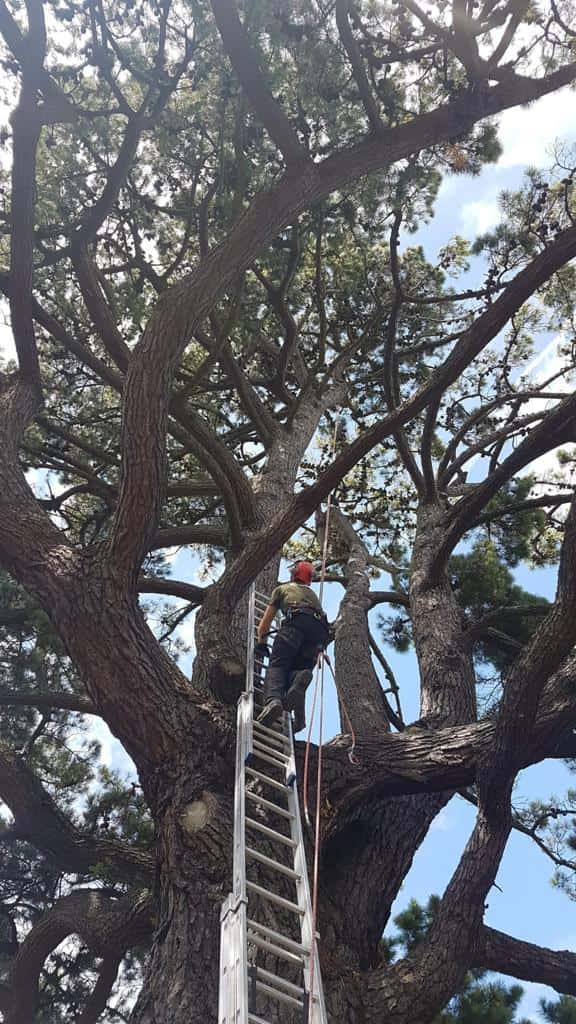
Trees growing beside paths and driveways can gradually extend into areas used by vehicles and pedestrians. Branches that were once well above head height may droop as they lengthen, become heavier or produce dense seasonal growth.
Professional tree cutting can restore suitable clearance and reduce the likelihood of branches becoming an ongoing obstruction. The work should be planned around the tree’s natural structure, future growth and position rather than simply removing every branch that enters the space.
How Professional Tree Cutting Improves Access
Effective clearance work begins with assessing how the tree interacts with the surrounding area. A tree surgeon will consider branch height, spread, condition and growth direction before selecting which limbs to shorten or remove.
Tree cutting may help to:
- Create clearer access along paths
- Improve vehicle clearance on driveways
- Open sightlines near entrances and turning areas
- Prevent branches brushing against vehicles
- Reduce low growth around parking spaces
- Remove dead or damaged limbs above access routes
- Make routine garden maintenance easier
The objective is to improve access while retaining a balanced, healthy canopy.
Why Branches Become an Obstruction
As branches mature, their increasing length and weight can cause them to hang lower. Leaves, flowers, fruit or wet foliage may add further weight during particular seasons.
New shoots can also grow rapidly into open areas where more light is available. A path or driveway may therefore become obstructed even when the tree appeared suitably positioned a few years earlier.
Other contributing factors include:
- Previous pruning that encouraged dense regrowth
- Branches extending towards available sunlight
- Storm damage altering the canopy
- Weak or overextended limbs
- Several trees growing into the same space
- A tree that has outgrown its original setting
Understanding the cause helps determine the most effective form of pruning.
Crown Lifting Can Increase Clearance
Crown lifting involves removing selected lower branches to raise the base of the canopy. This can create more space above paths, driveways and garden access points.
The work must be proportionate to the tree. Removing too many lower branches can affect its appearance and alter how weight is distributed through the canopy. Large branches attached directly to the main stem should only be removed after careful assessment.
In some cases, shortening smaller secondary growth will provide enough clearance without removing important structural limbs.
Selective Pruning Can Redirect Growth
Not every obstructing branch needs to be removed completely. A branch may be shortened back to a suitable growth point, preserving part of its structure while redirecting future development.
Selective pruning produces a more natural appearance than cutting every branch at the boundary of the access route. Correctly positioned cuts also reduce the likelihood of leaving long stubs or encouraging clusters of weak shoots.
Crown Reduction May Help with Wider Overgrowth
When the entire canopy has become too broad for the available space, crown lifting alone may not solve the problem. Branches can continue extending over the driveway at a higher level or create excessive weight on one side.
A measured crown reduction can decrease the tree’s overall height and spread while maintaining a proportionate outline. This is particularly useful where a tree has become unbalanced or repeatedly grows into the same access area.
Clear Sightlines Around Driveways
Overgrown branches can restrict visibility when entering, leaving or turning within a driveway. Dense growth may also conceal pedestrians, parked vehicles or the edges of the access route.
Selective pruning can improve sightlines by removing or shortening branches in the relevant part of the canopy. The work should focus on the actual obstruction rather than thinning the entire tree unnecessarily.
Dead or Damaged Branches Need Separate Attention
A branch obstructing access may also be dead, split or weakly attached. In this situation, simply shortening the outer growth may not address the condition of the whole limb.
Professional assessment checks for:
- Deadwood
- Cracks or splits
- Weak forks
- Decay around branch unions
- Hanging or partially detached branches
- Damage caused by vehicles or weather
Removing defective growth can improve clearance while also preventing weakened branches from deteriorating above a frequently used area.
Why Cutting Branches Back Too Harshly Can Be Counterproductive
Severe or indiscriminate cutting may encourage vigorous new shoots. These can grow quickly into the cleared space, creating a denser obstruction than before.
Large cuts may also spoil the tree’s natural shape and remove more live growth than it can comfortably tolerate. A better approach is to make carefully selected cuts that achieve the necessary clearance while supporting controlled future growth.
Timing Can Influence the Result
The appropriate time for cutting depends on the tree species, its condition and the type of work required. Some trees respond better to pruning at particular stages of the year, while damaged branches may require more immediate attention.
A professional tree surgeon can recommend suitable timing and explain whether the clearance is likely to require periodic maintenance as the tree continues growing.
Planning for Future Growth
Tree cutting should consider how the canopy is likely to develop, not only how it looks on the day of the work. A branch shortened too close to the path may quickly become an obstruction again, while excessive pruning can trigger unwanted regrowth.
A practical plan may involve:
- Establishing appropriate clearance
- Retaining strong, well-positioned branches
- Redirecting growth away from access routes
- Monitoring fast-growing sections
- Scheduling measured future maintenance
- Managing nearby hedges or vegetation at the same time
This approach helps keep the route usable without repeatedly making harsh cuts.
When More Extensive Tree Surgery May Be Needed
Routine pruning is often sufficient when the obstruction involves smaller branches or limited growth. Broader work may be appropriate if the tree has become significantly oversized, structurally unbalanced or unsuitable for its position.
Tree removal should not be the automatic response to overhanging branches. It is usually considered only when appropriate pruning cannot provide a satisfactory long-term outcome or the tree has serious defects affecting its retention.
Conclusion
Professional tree cutting can prevent branches from obstructing paths and driveways by improving clearance, opening sightlines and directing future growth away from access routes. Crown lifting, selective pruning or crown reduction may be recommended depending on the size and structure of the tree.
NS Tree Surgery Ascot provides professional tree cutting and pruning in Ascot, Berkshire. If overhanging branches are restricting access around your property, contact the team to arrange an assessment and discuss a suitable approach.
Call us on: 01344 951 395
Click here to find out more about NS Tree Surgery Ascot
Click here to complete our contact form and see how we can help with your tree needs.