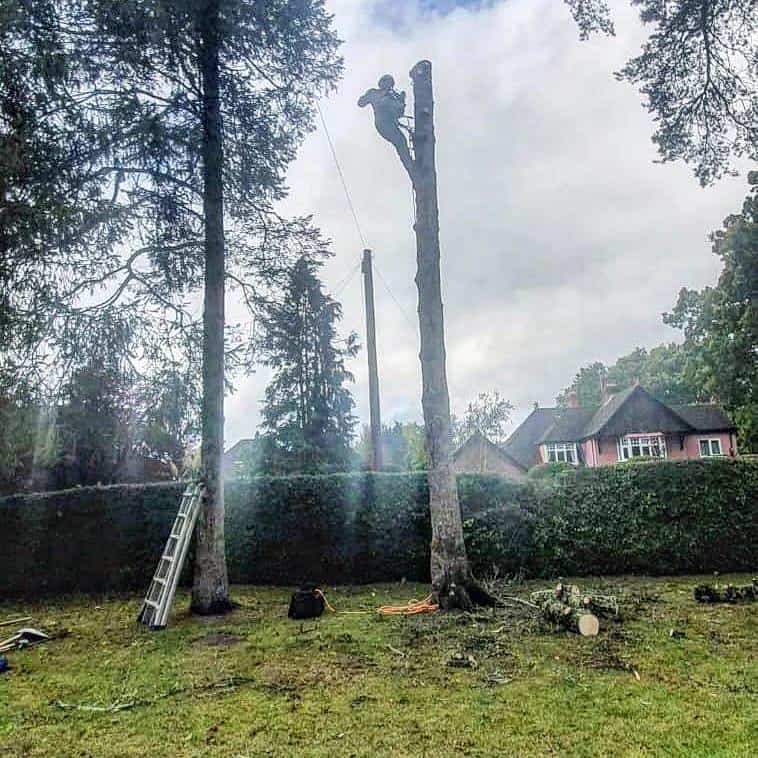
Mature trees can provide shade, privacy, structure and character within a garden. However, without suitable maintenance, branches may become overcrowded, damaged or too large for their surroundings. This can affect the tree’s condition while making it increasingly difficult to manage.
Professional tree surgery uses carefully selected techniques to address specific problems without removing more growth than necessary. The objective is to create a suitable balance between the health of the tree and the practical needs of the property.
How Does Professional Tree Surgery Support Long-Term Tree Care?
Effective tree surgery begins with an assessment of the tree’s species, age, condition and position. This allows the work to be tailored to the individual tree rather than applying the same cutting method in every situation.
Removing Dead or Damaged Branches
Dead, split and weakened branches can remain within the crown long after they have stopped contributing to healthy growth. These branches may deteriorate further, particularly during periods of strong wind.
Selective removal can:
- Reduce the risk of branches breaking unexpectedly
- Prevent damaged limbs from interfering with healthy growth
- Improve the tree’s overall appearance
- Make developing defects easier to monitor
- Reduce unnecessary weight in vulnerable areas
The cuts must be positioned correctly to avoid leaving damaging stubs or creating wounds larger than necessary.
Improving the Structure of the Crown
Branches can sometimes become crowded, crossed or poorly arranged. As they grow, rubbing branches may damage one another, while dense areas can place uneven weight across the crown.
Selective pruning can remove unsuitable growth and improve the spacing between important branches. This helps develop a more balanced structure while retaining the tree’s natural shape.
Controlling Excessive Spread
A tree may remain healthy while becoming too large for its position. Long branches can extend over roofs, paths, driveways or neighbouring parts of the garden. They may also reduce light or interfere with the practical use of the space below.
Crown reduction can decrease the tree’s height or spread by shortening selected branches back to suitable growth points. When completed professionally, it maintains a natural outline and avoids the abrupt appearance caused by indiscriminate cutting.
Creating Clearance Around Buildings
Branches growing close to roofs, walls, windows or guttering can become troublesome as they move in the wind. Leaves and small twigs may also contribute to blocked drainage systems.
Careful pruning can create appropriate clearance while preserving the tree’s structure. The amount removed should be proportionate, as excessive cutting on one side can leave the crown unbalanced.
Allowing More Light Through the Crown
A dense canopy may create heavy shade beneath and around a tree. Crown thinning selectively removes a proportion of smaller branches throughout the canopy without significantly changing its overall size.
This can improve light penetration and air movement while retaining the tree’s established form. The work should be distributed evenly to avoid leaving sparse patches or concentrating weight at the ends of branches.
Preventing Minor Defects from Becoming Larger Problems
A small split, weak branch union or section of deadwood may not initially appear serious. However, additional growth and exposure to poor weather can increase the strain on these areas.
Regular inspection allows developing problems to be identified before they become more difficult to manage. Where appropriate, targeted pruning can reduce pressure on vulnerable parts and preserve the stronger sections of the tree.
Supporting Recovery After Weather Damage
Strong winds can tear branches, expose splits or leave part of the crown unbalanced. Removing only the visibly broken limb may not always be sufficient, as nearby branches may also have been weakened.
A tree surgeon can assess the remaining structure and determine whether damaged growth should be removed, shortened or monitored. Corrective work can help restore balance and reduce further stress.
Why the Timing of Tree Work Matters
Different trees respond differently to pruning, and the most suitable timing depends on the species, condition and purpose of the work. Some trees benefit from maintenance during particular stages of their growth cycle, while dangerous or damaged branches may require more immediate attention.
A professional assessment helps ensure that work is carried out at an appropriate time and that the amount of growth removed remains suitable.
Why Precise Cutting Is Important
Tree surgery is not simply a matter of making a tree smaller. Poorly positioned or excessive cuts can stimulate weak regrowth, spoil the natural shape and place unnecessary stress on the tree.
Professional work focuses on:
- Choosing appropriate branches for removal
- Making clean cuts at suitable positions
- Retaining balanced growth
- Avoiding excessive canopy loss
- Using the correct pruning method for the desired outcome
- Considering how the tree will develop afterwards
This considered approach helps produce results that are both practical and sympathetic to the tree.
Establishing a Manageable Maintenance Routine
Trees are generally easier to manage when they receive suitable attention before becoming severely overgrown. Periodic inspections and selective maintenance can prevent the need for more extensive work later.
The correct frequency varies according to species, growth rate, position and previous pruning. A tailored maintenance plan can help keep the tree compatible with its surroundings while preserving its natural value.
Conclusion
Professional tree surgery can keep trees healthy and manageable by removing damaged growth, improving crown structure, creating clearance and controlling excessive spread. The most effective approach uses precise, selective work based on the condition and future development of each tree.
NS Tree Surgery Ascot provides professional tree surgery services in Ascot, Berkshire. If a tree has become overgrown, unbalanced or difficult to manage, contact our team to arrange an assessment and discuss the most suitable care.
Call us on: 01344 951 395
Click here to find out more about NS Tree Surgery Ascot
Click here to complete our contact form and see how we can help with your trees needs.